You don’t need every answer to ask for a quote. “Not sure yet” is a fine answer to several of these, and your drawing helps you decide. But settle all ten before you approve your drawing. Planning a sign for a lobby instead? See Reception wall logo signs.
The checklist at a glance
| Decide | Read more |
|---|---|
| 1. The exact words | Below |
| 2. Your logo file | How to prepare your logo file |
| 3. Lighting style | Front-lit vs. halo-lit |
| 4. Letter size | Size guide |
| 5. The wall or fascia | How to measure your wall |
| 6. Photos | How to measure your wall |
| 7. Landlord rules | Sign permits: what to ask |
| 8. City permit | Sign permits: what to ask |
| 9. Where the power is | Power supplies for LED channel letters |
| 10. Your deadline | Below |
1. The exact words
Write out the sign text exactly as it should appear: capital letters, spaces, apostrophes and the “&” or “and.”
- Fewer words, bigger letters. On the same wall, a shorter name can be built taller. Our size guide shows how the number of characters sets the width.
- Leave the extras off the wall. Phone numbers, hours and long taglines are hard to read from the road. The door or window is a better place for them.
- Check the spelling on your drawing, letter by letter, before you approve it.
2. Your logo file
Any file is enough to start, but a vector file (AI, EPS, SVG or a PDF from a design program) gives the cleanest letters. If your logo has text in it, ask your designer to convert it to outlines. Then decide which parts of the logo go on the wall: the symbol, the name, or both. If your colors have to match your brand, see How to match channel letters to your brand colors.
3. Lighting style
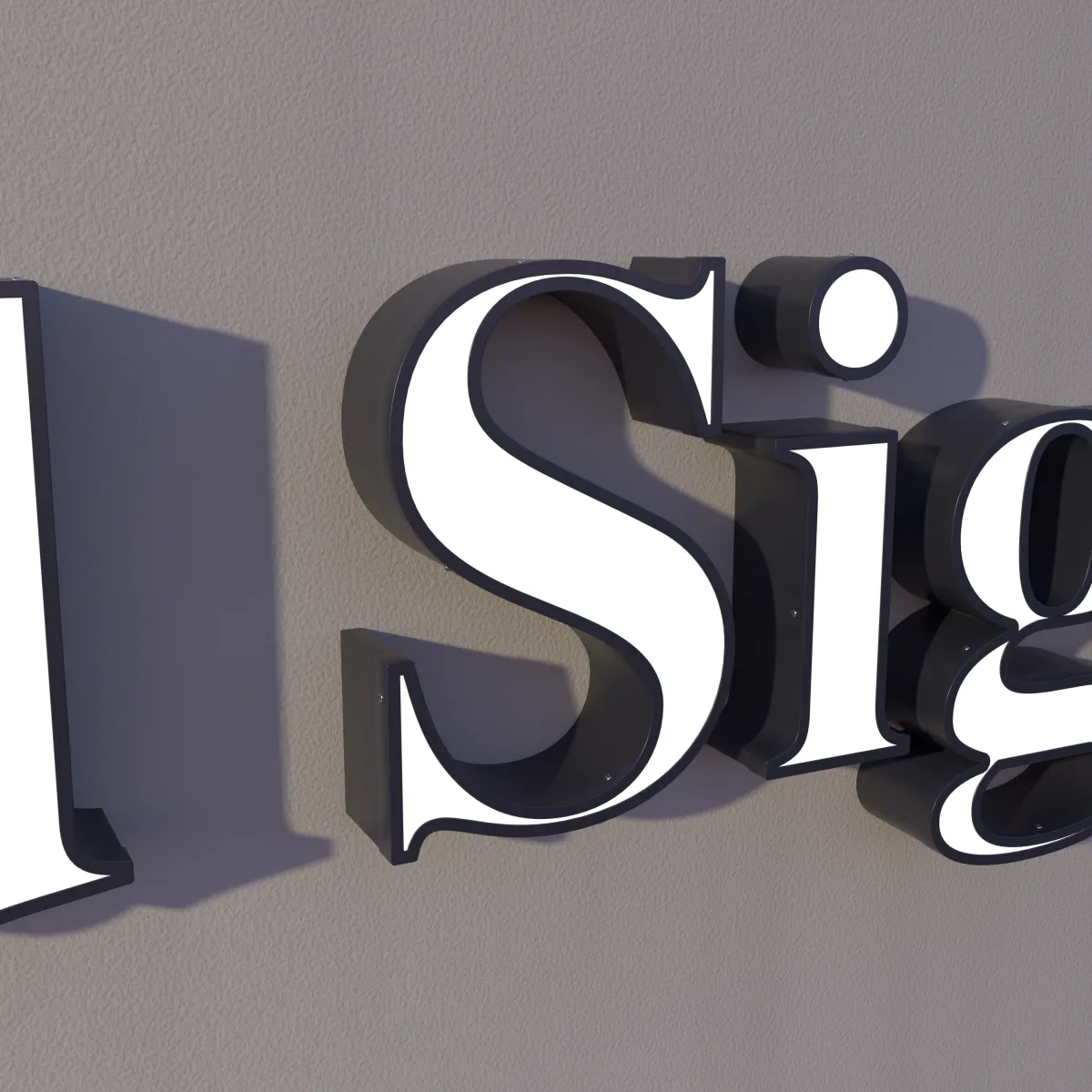
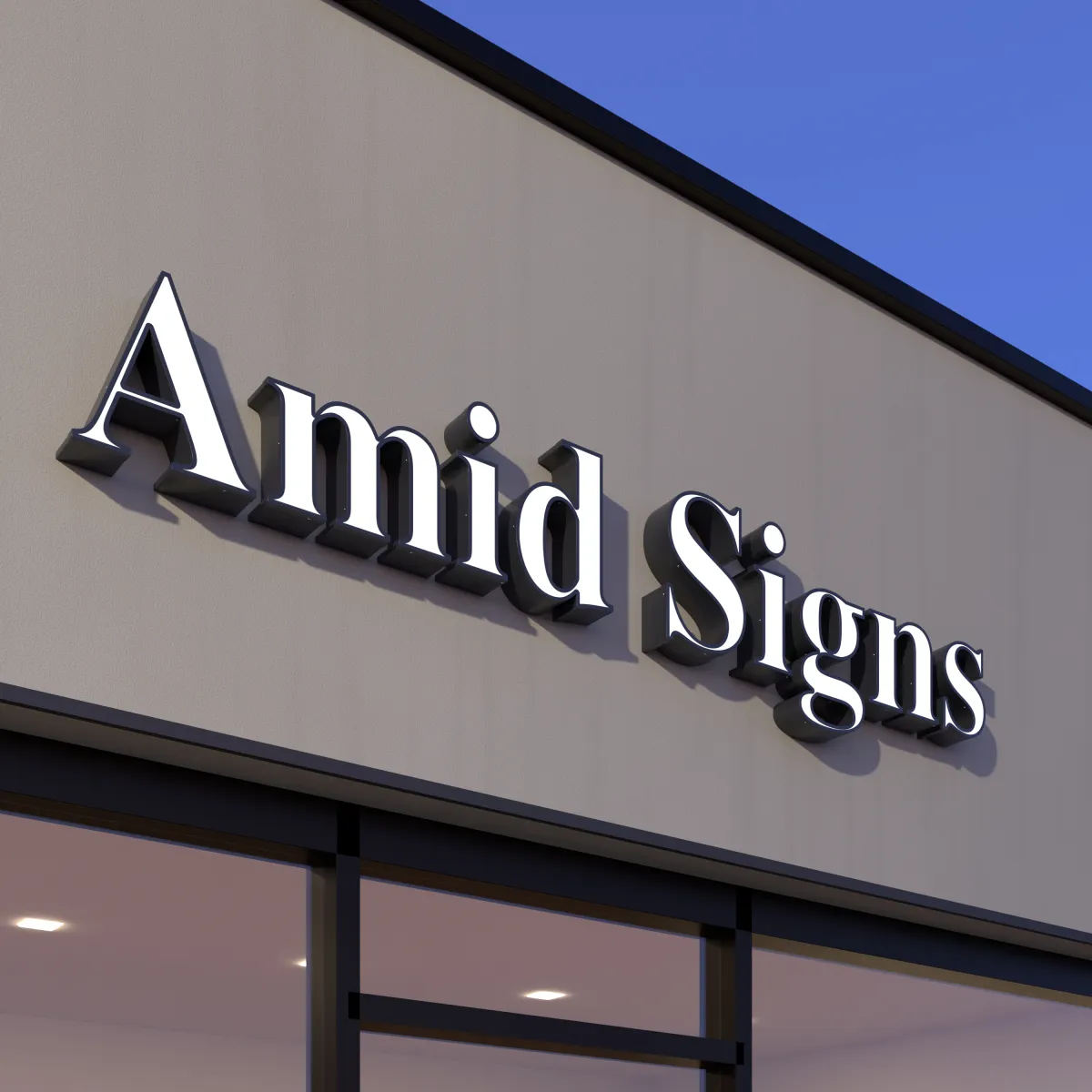
- Front-lit: the acrylic face glows. The easiest to read from the road and across a parking lot.
- Halo-lit: solid steel faces printed with your artwork, with light glowing on the wall behind. Looks like solid metal letters by day; best on a light, smooth wall.
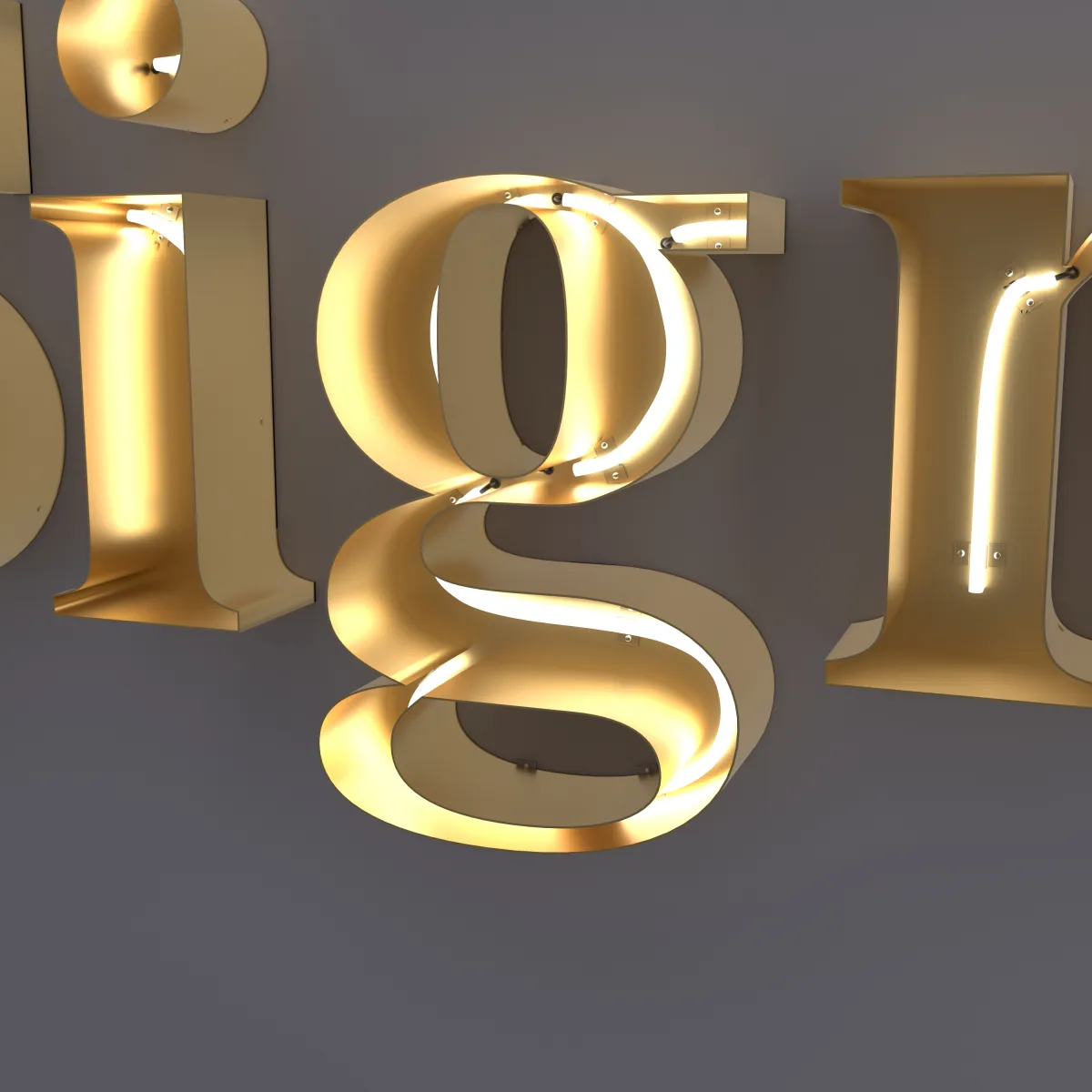
- Open-face neon: a visible LED neon line inside each open steel channel.
Undecided? Pick “Not sure yet” on the quote form and we suggest one on your drawing. Channel letters: the complete guide compares all three, and our pages by type of business show what tends to suit restaurants, stores, salons and more.
4. Letter size
Size starts with distance. Measure from where people first need to read your sign — the road, the far side of the parking lot — to the wall. Our size guide recommends about 1 in of letter height for every 10 ft, so a sign read from 150 ft away calls for letters around 15 in tall. Then check that the letters fit your wall with room to spare.
You can leave the height blank on the form and let us suggest one.
5. The wall or fascia
Measure the usable width and height of the sign area — not the whole building — and note anything in the way: lights, cameras, vents, conduit, seams. Write down the wall surface, too: brick, block, stucco, wood or metal panel. It decides the fixings, and the mounting hardware is listed on your drawing. Every letter mounts flush to the wall, using a paper template to mark the holes — see How flush-mounted channel letters are installed.
Replacing an old sign? Ask who removes it and who patches the old holes.
6. Photos
- A straight-on photo of the storefront in daylight, with a tape measure across the wall if you can
- A photo from where customers see it: the road or the parking lot
- A close-up of the wall surface
- A night photo, if you can — it shows street lights and your neighbors’ signs
7. Landlord questions
If you lease, ask before you order:
- Is there a written sign policy (often called sign criteria) for the building? Ask for a copy.
- Does the landlord need to approve the drawing? What do they need to see?
- Where on the fascia can the sign go, and how big can it be?
- Are there rules about colors, lighting or the hours a sign can be on?
- Can we drill through the fascia? Flush-mounted letters need holes for the fixings and the wires.
- Is there already a sign circuit at this storefront? Is it on a timer?
8. City permit
Many cities have rules for wall signs and require a permit for a new one. Ask about size limits, lighting rules, who files the application and how long approval takes. The full list of questions is in Sign permits: what to ask your city before you order. Send the answers with your quote request and we size your drawing to fit.
9. Where the power is
Lit letters need power at the wall behind the sign, and the power supply is listed on your drawing. Power supplies for LED channel letters explains the basics.
- Find out where power can come into the wall, and whether there’s already a sign circuit.
- Decide whether the sign should run on a timer or switch on at dusk.
- Have a licensed electrician make the power connection.
10. Your deadline
Your opening date is fixed, but several steps before it depend on other people. Work backward from your date:
| Step | Time |
|---|---|
| Your drawing and price | We email it to you |
| Landlord approval | Ask your landlord |
| City permit | Ask your city |
| Building and shipping | Confirmed with your quote |
| Installer and electrician | Book them early |
Put your date in the “Need it by” field on the quote form.
Send what you have
Fill in the quote form with the sign text, your logo, the wall width, a photo and your style (or “Not sure yet”), and add the rest in the notes. We reply with a drawing showing every letter size, a preview of the sign lit up and an exact price. Price depends on letter size and how many letters; see pricing. Nothing is made until you approve the drawing.