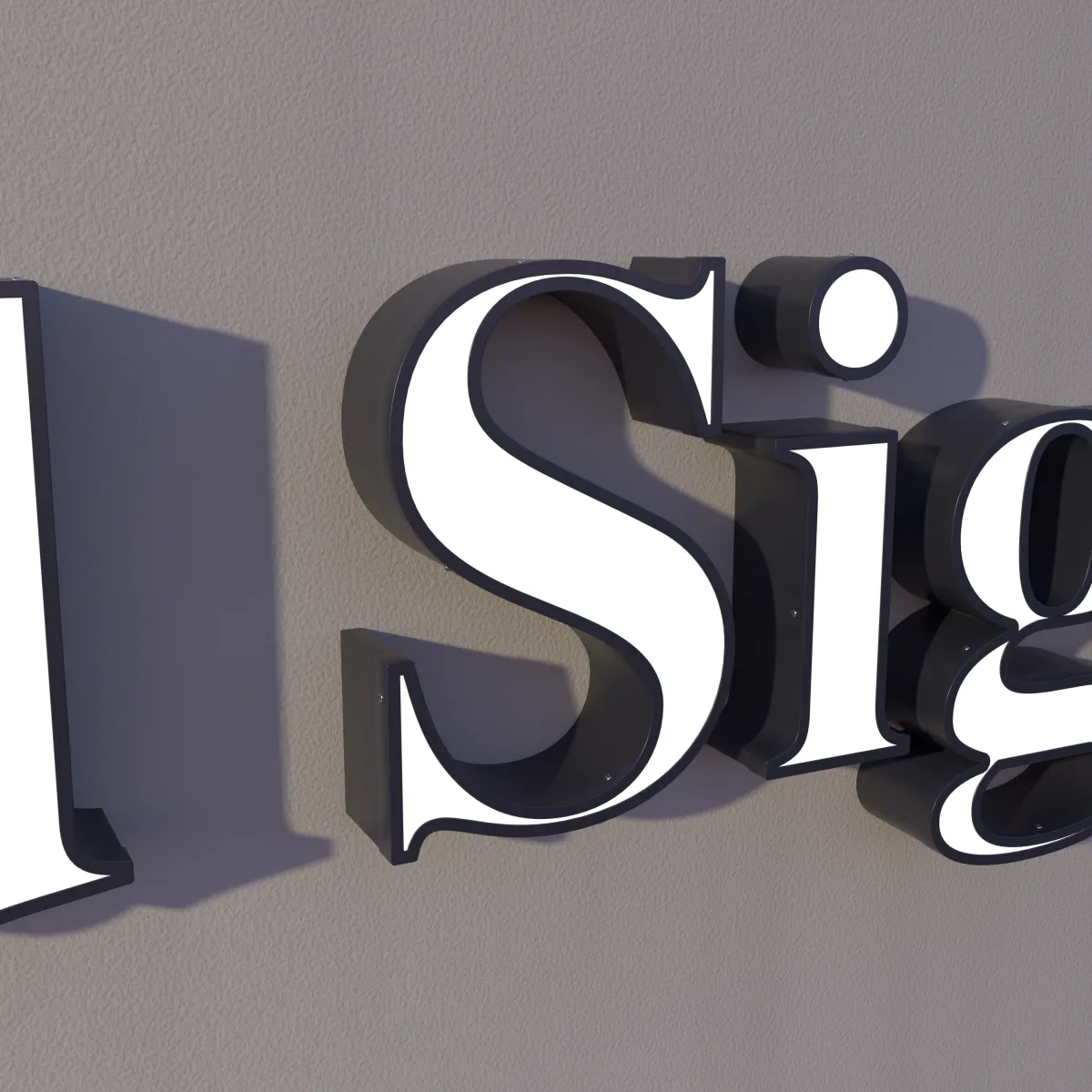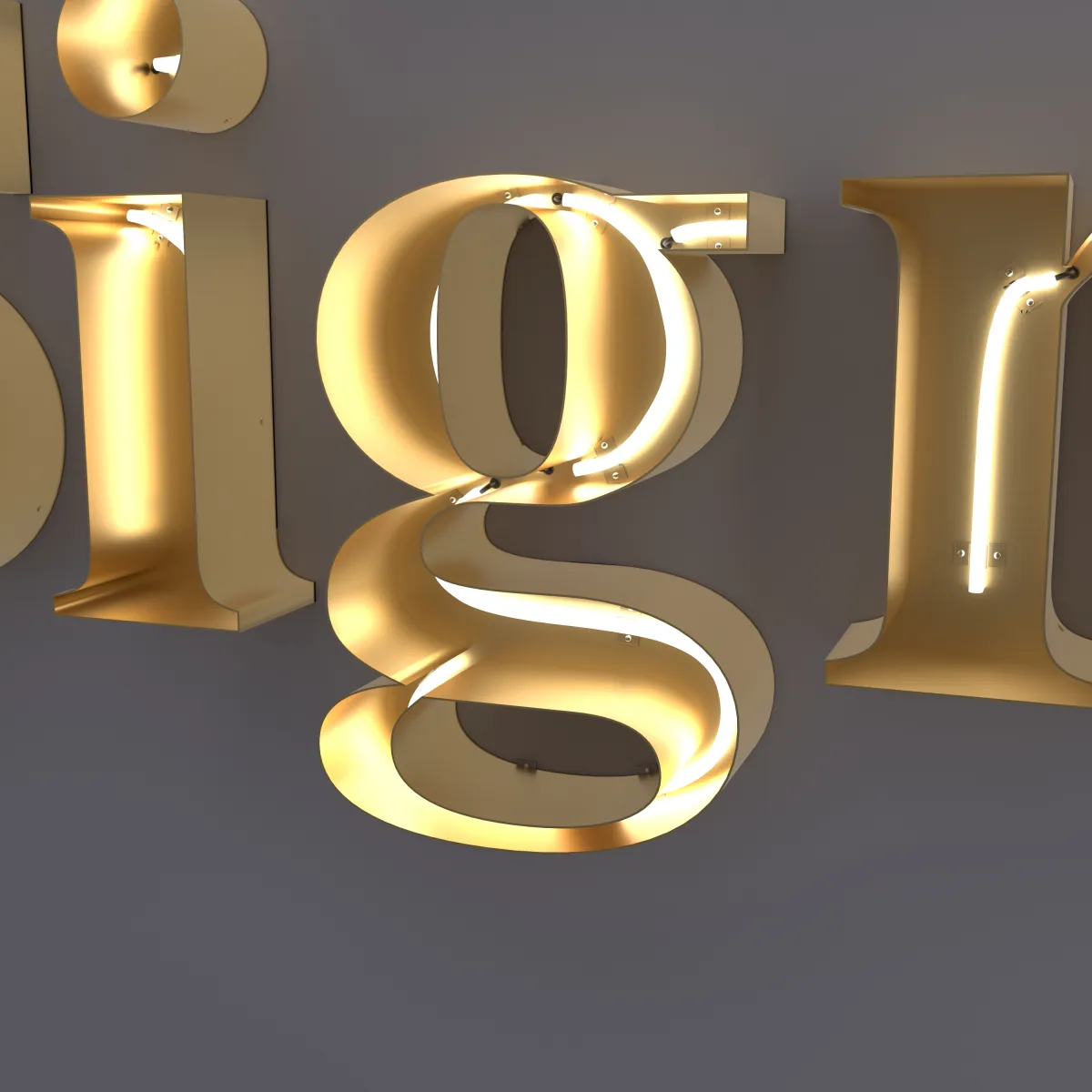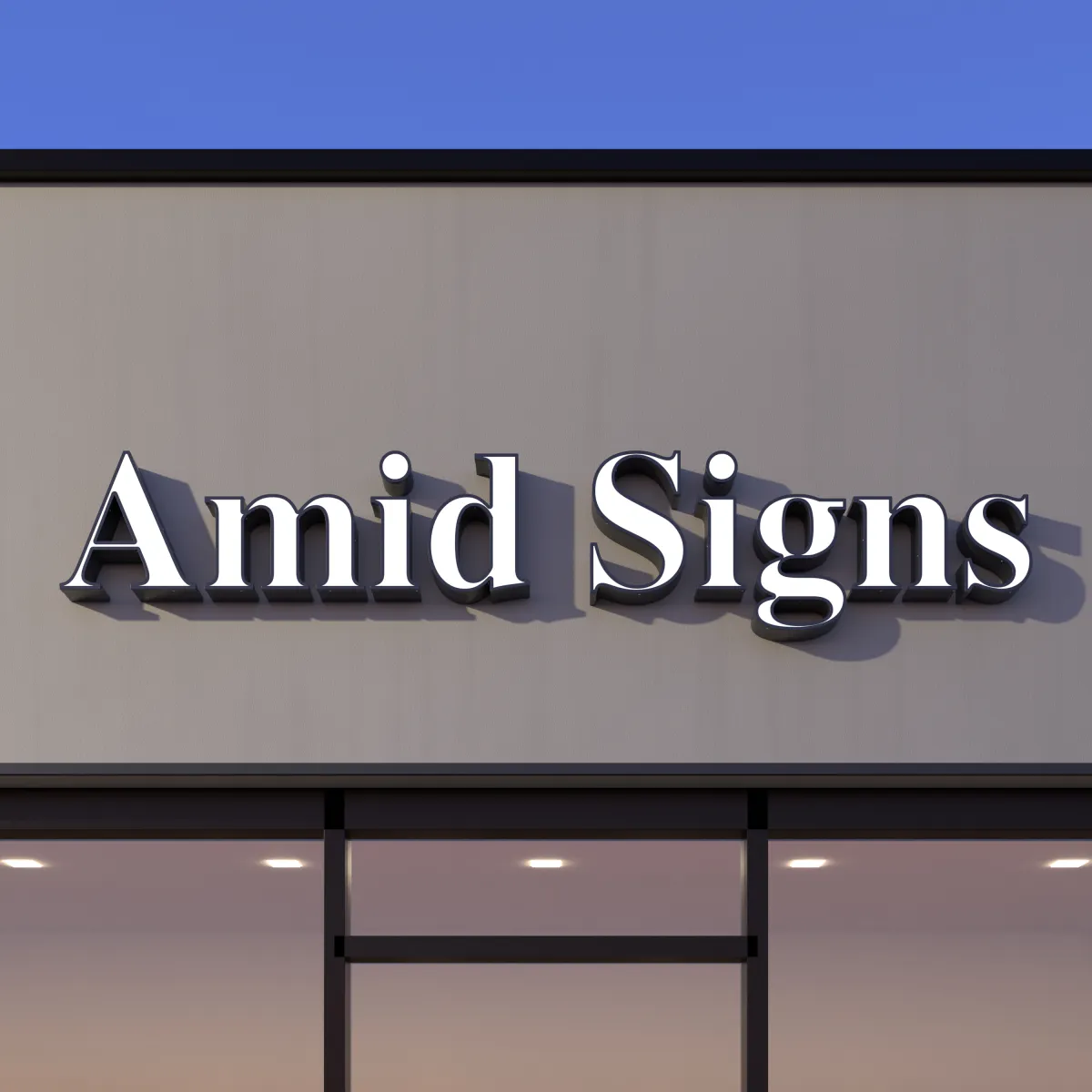
You don’t need to know your letter size before you ask for a quote. What helps most is a few measurements of the wall and one good photo. With those, we can draw your letters at a size that fits the space and still reads well.
This guide covers what to measure, the easy mistakes to avoid, and what to send us.
What you need
- A tape measure (a long one for a storefront)
- A pencil and paper, or the notes app on your phone
- A phone camera
- A helper and a safe ladder if the sign area is above head height
Step 1: Find the space the sign can use
Start with the part of the wall where the letters will go. On a storefront this is usually the band of wall above the windows. Indoors it might be the wall behind a reception desk.
The usable space is often smaller than the wall. Look for anything the letters can’t cover or sit on:
- Windows, doors and trim
- Light fixtures, cameras, speakers and vents
- Pipes, conduit, downspouts and electrical boxes
- Awnings, ledges or a change in the wall surface
- Seams or joints between wall panels
Measure the clear, flat area between those things, not the outside of the building.
Step 2: Measure the width and height
Measure the usable width from one side to the other, then the usable height from top to bottom. Write both down in feet and inches. Measure in two or three places: walls are rarely perfectly square, and the smallest number is the one that counts.
If your landlord or city has a limit, such as a maximum sign width or sign area, write it next to your measurements. Not sure? See Sign permits: what to ask your city before you order.
Step 3: Measure up from the ground
Measure from the ground (or the floor, indoors) to the bottom of the usable area. This helps us show your sign at the right scale on the drawing, and it helps you think about how far away people will be when they read it. Some sign rules also mention height above the ground, so it’s a useful number to have.
Step 4: Take a straight-on photo
A photo shows what a tape measure can’t: the wall color, the texture and everything around the sign.
- Stand back and face the wall squarely, so the photo isn’t taken at an angle.
- Shoot in daylight, with the whole sign area and a little wall on each side in the frame.
- If you can, stretch a tape measure across the wall so it shows in the photo.
- Add a close-up of the wall surface: brick, stucco, block, wood, metal panel or drywall.
What to measure, and why
| Measurement | Why it matters |
|---|---|
| Usable width | The longest your sign can be |
| Usable height | The tallest your letters can be (two lines need more) |
| Height from the ground | Shows scale and how far away people read it |
| Obstacles | Lets us keep letters clear of lights, vents and seams |
| Wall surface | Decides how the letters are fixed; the mounting hardware is listed on your drawing |
| Landlord or city limits | Your drawing has to fit inside them |
How wall size turns into letter size
The wall sets the limits, but several things decide how big each letter ends up:
- How many letters. A long business name needs more width at the same letter height.
- Your font. A wide font takes more room than a narrow one for the same words.
- One line or two. Two lines let each letter be taller on a narrow wall, but need more height.
- Viewing distance. Letters read from across a parking lot need to be bigger than letters read in a lobby.
- Space around the sign. Letters that run edge to edge look cramped. Leave some wall showing on every side.
Our size guide goes into letter height in more detail. You don’t have to work it out yourself, though: tell us the space and we suggest a size on your drawing.
Common mistakes
- Measuring the building, not the space. Once you leave room for trim and fixtures, the sign area is often narrower than it looks.
- Forgetting what’s on the wall. A light fixture in the middle of the band changes the whole layout.
- Rounding too much. “About 12 feet” might really be 11 ft 4 in. Send the real number.
- Skipping the landlord’s rules. Many shopping centers and leases have rules for tenant signs. Ask before you order.
- Measuring the wrong wall. Indoors, measure the exact wall the letters go on, not the whole room.
Measuring an indoor wall
The steps are the same. Measure the wall, note outlets, switches, screens and artwork, and measure from the floor to where you want the bottom of the letters. People usually stand closer indoors, so letters can often be smaller. More in Indoor vs. outdoor channel letters.
What to send with your quote request
On the quote form, include:
- The wall space (width) — the form asks for it in feet
- A letter height, if you already have one in mind, or leave it to us
- A photo of the wall, ideally with a tape measure in it
- Your logo file (see How to prepare your logo file)
- Indoor or outdoor
- A lighting style: front-lit, halo-lit, open-face neon or “Not sure yet”
- In the notes: the wall surface, anything on the wall, and any landlord or city limits
We reply with a drawing of your letters with their sizes, a preview of the sign lit up, and an exact price. The price depends on letter size and how many letters you have; our pricing page explains how. Nothing is made until you approve the drawing.