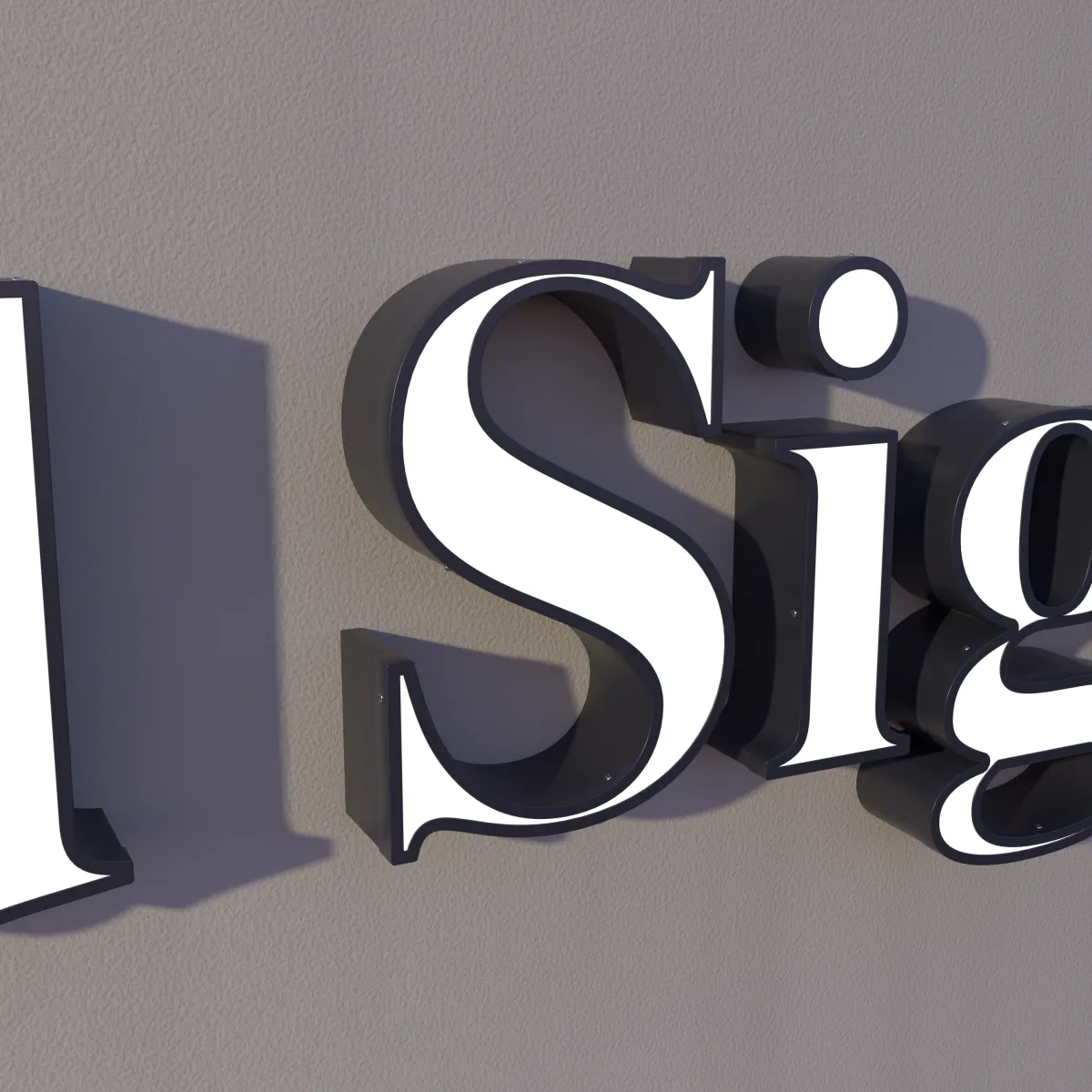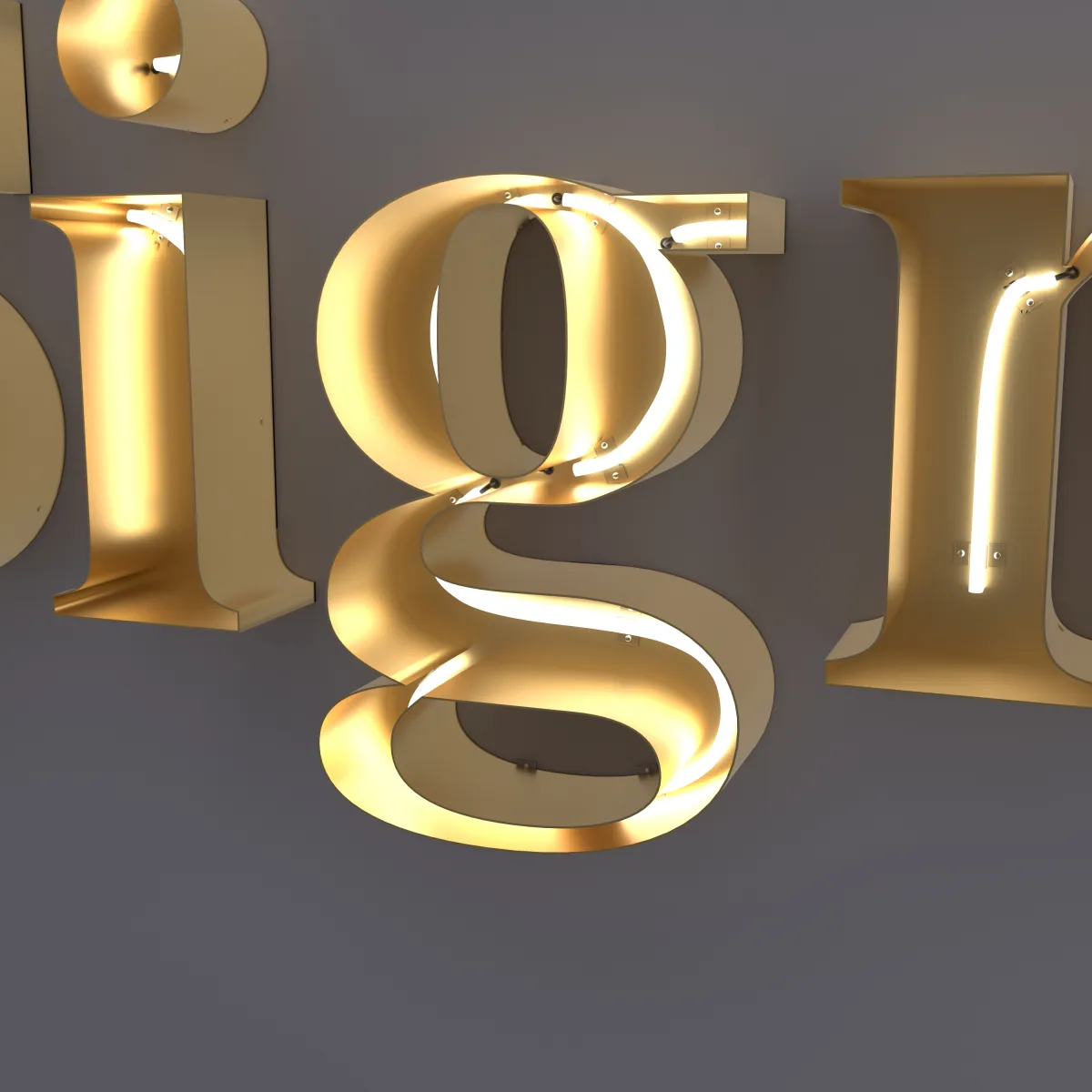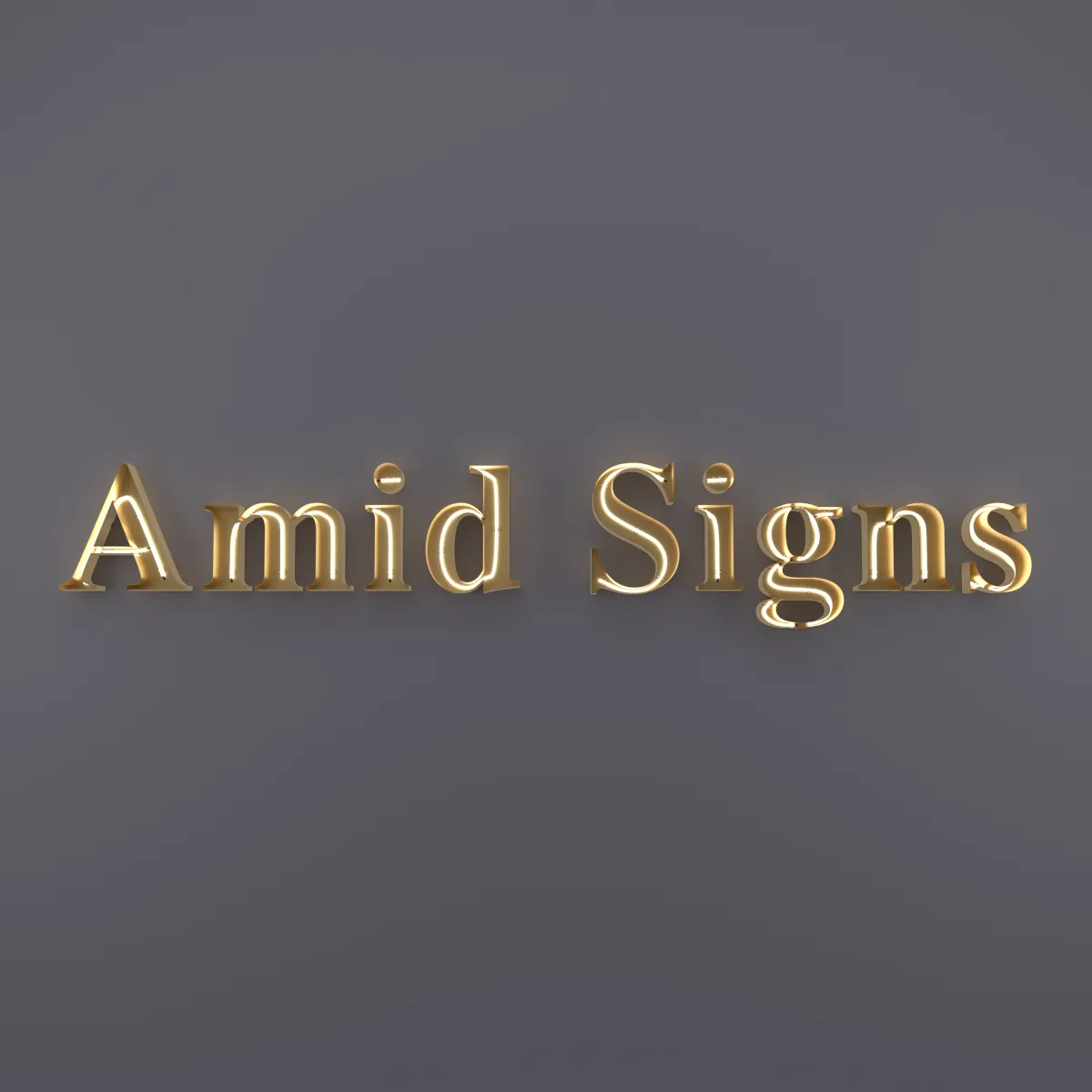
Indoors or out, the letters start the same way: 304 stainless steel, cut from your logo and mounted flush to the wall. What changes is the setting around them — how far away people are, what light competes with the sign, the weather, the power, and the rules.
This guide walks through each one so you know what to tell us when you ask for a quote.
The short version
| Topic | Indoor | Outdoor |
|---|---|---|
| Viewing distance | Usually close: a lobby, a hallway, across a room | Often far: across the street or a parking lot |
| Letter size | Can usually be smaller | Usually bigger |
| Light around it | Steady room light | Bright daylight, then dark nights |
| Weather | None | Sun, rain, wind, dirt, sometimes salt |
| Power | A licensed electrician makes the connection | A licensed electrician makes the connection |
| Permits | Ask, especially if it can be seen from outside | Ask your city before you order |
Size: distance decides
Indoors, people are usually a few steps from the sign — at the front desk, in the waiting area, walking down a hall. Outdoors, they may be across the street, in a moving car, or at the far end of a parking lot. The farther away the reader, the bigger the letters need to be.
Fine details matter too. A thin script or a small tagline that looks sharp across a lobby can blur from the street. Our size guide goes into letter height, and we suggest a size on your drawing either way.
Light: what competes with your sign
Outdoors, daylight is strong. By day, people read your letters mostly by their shape and color, so pick colors that stand out against the wall. From dusk on, the light takes over.
Indoors, the light is steady and usually softer, so the glow of the letters can show all day. That makes halo-lit and open-face neon letters a good fit for lobbies and reception areas, where people see them up close.
How each style behaves:
- Front-lit: the acrylic face glows, so the whole letter lights up. The easiest style to read from the road.
- Halo-lit: the face is solid steel and the light glows on the wall behind. The glow shows best on a light, smooth, matte wall; a dark, glossy wall absorbs the light and can mirror the LEDs.
- Open-face neon: you see the LED neon line inside each open steel channel. If it goes outdoors, say so on the quote form; it can change the parts we use.
Weather (outdoor signs)
Stainless steel doesn’t rust the way plain steel does, which is why it’s used for outdoor signs. A few settings still need care:
- Near the ocean or salted roads. Salt left on stainless steel can cause brown surface stains, often called tea staining. Rinsing the letters now and then with mild soapy water and clean water helps. Tell us on the quote form if your sign is in a spot like this.
- Under an overhang. Rain washes open walls, but sheltered spots collect dirt. Wipe those letters down from time to time.
Power
Every lit sign needs power at the wall, and the power supply for your letters is listed on your drawing.
- Plan where the power comes from before you pick the exact spot for the sign.
- Have a licensed electrician make the power connection, indoors or out.
The wall
Outdoor walls are often brick, block, stucco or metal panel. Indoor walls are often drywall, wood, tile or stone. Every surface needs the right fixings, and the mounting hardware for your sign is listed on your drawing. The letters mount flush to the wall in both cases, using the paper template to mark the holes — see How flush-mounted channel letters are installed.
Permits and approvals
Check with your city before you order an outdoor sign. If an indoor sign faces out through a window, ask whether it counts as an outdoor sign. And if you lease, ask your landlord either way. Our permit guide lists the questions to ask.
What to tell us on the quote form
- Indoor or outdoor — it’s a field on the quote form.
- How far away people will read the sign, roughly.
- A photo of the wall, so we can see the surface, the color and the light.
- Anything unusual: near the ocean, under an overhang, facing a window, a dark or glossy wall.
You get a drawing with letter sizes, a preview of the sign lit up and an exact price. Size and the number of letters set the price; pricing explains how.