Most lit wall signs on storefronts are one of two kinds: channel letters or a lightbox, also called a cabinet sign or box sign. Both glow at night and both can carry your logo. They look very different on a building, though, and they are priced, permitted and updated in different ways.
We make channel letters, not lightboxes. This guide still tells you plainly where a lightbox is the better choice.
What each one is
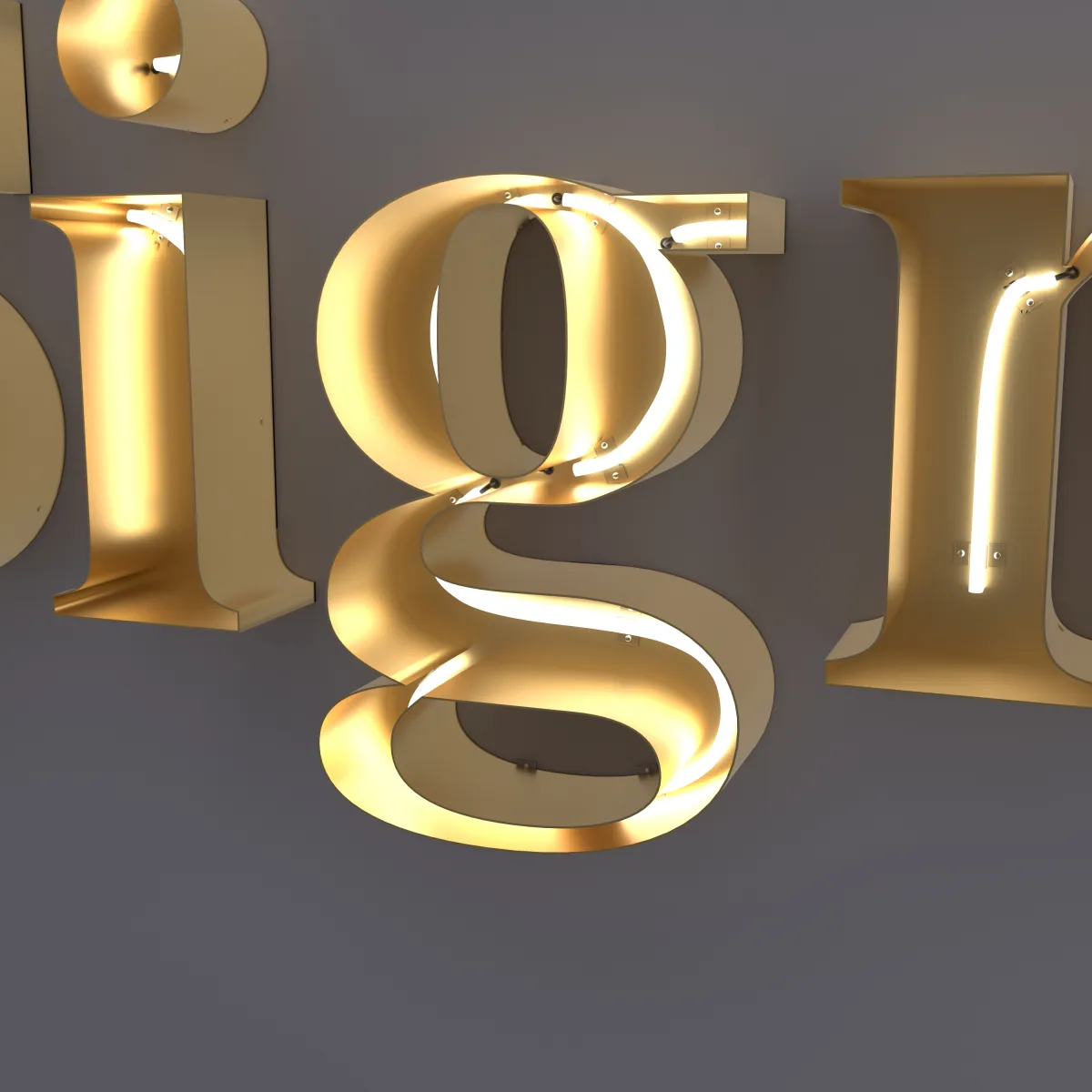
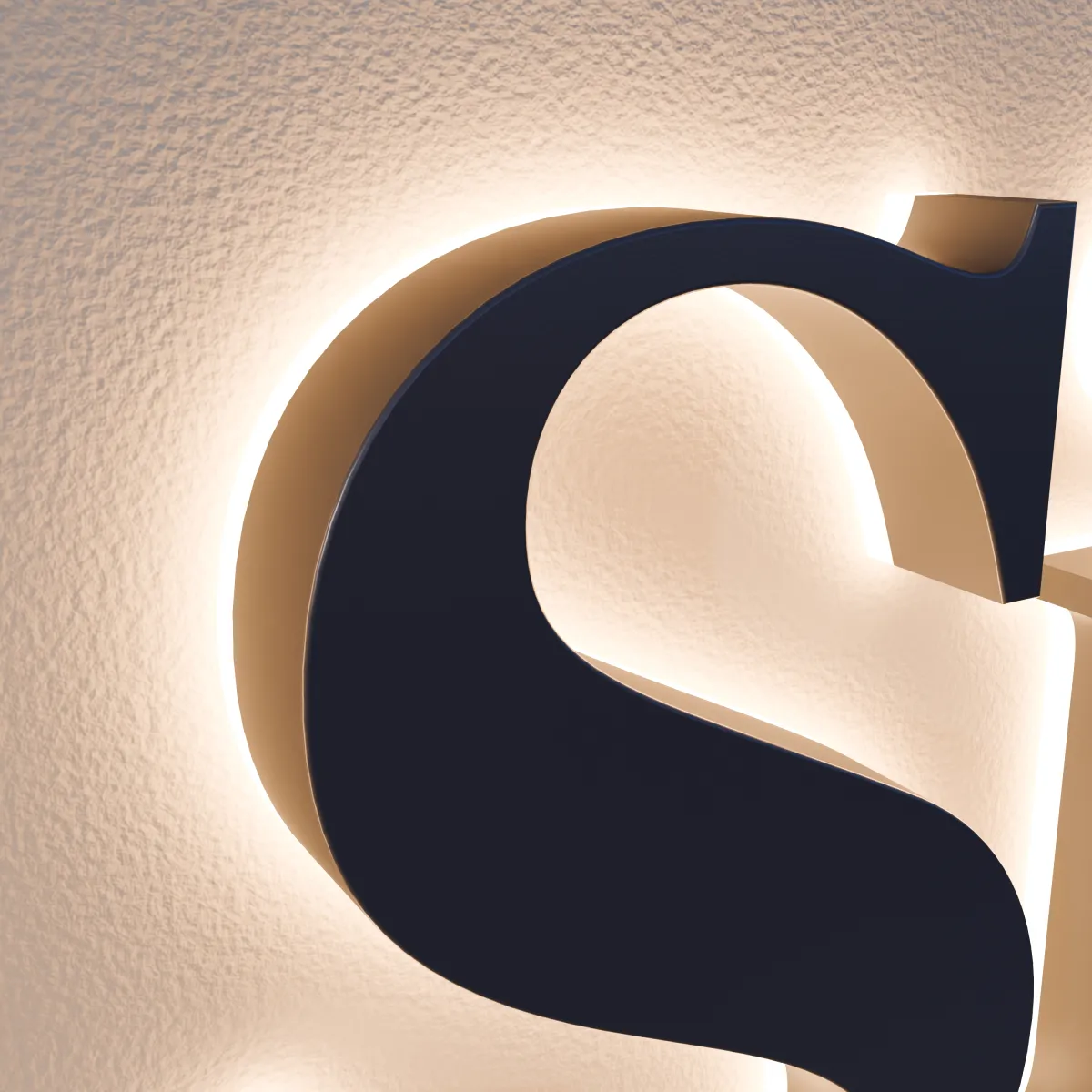
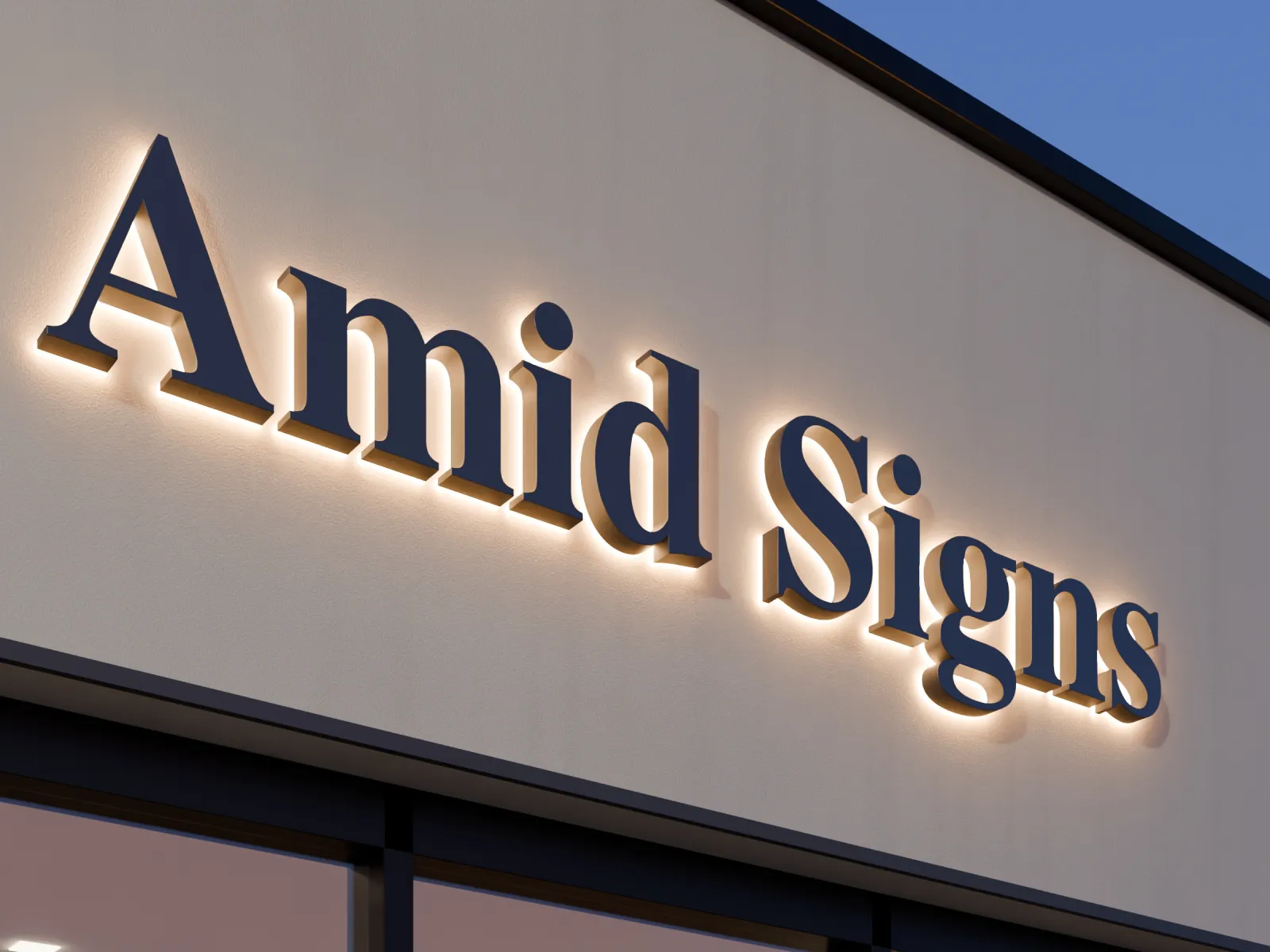
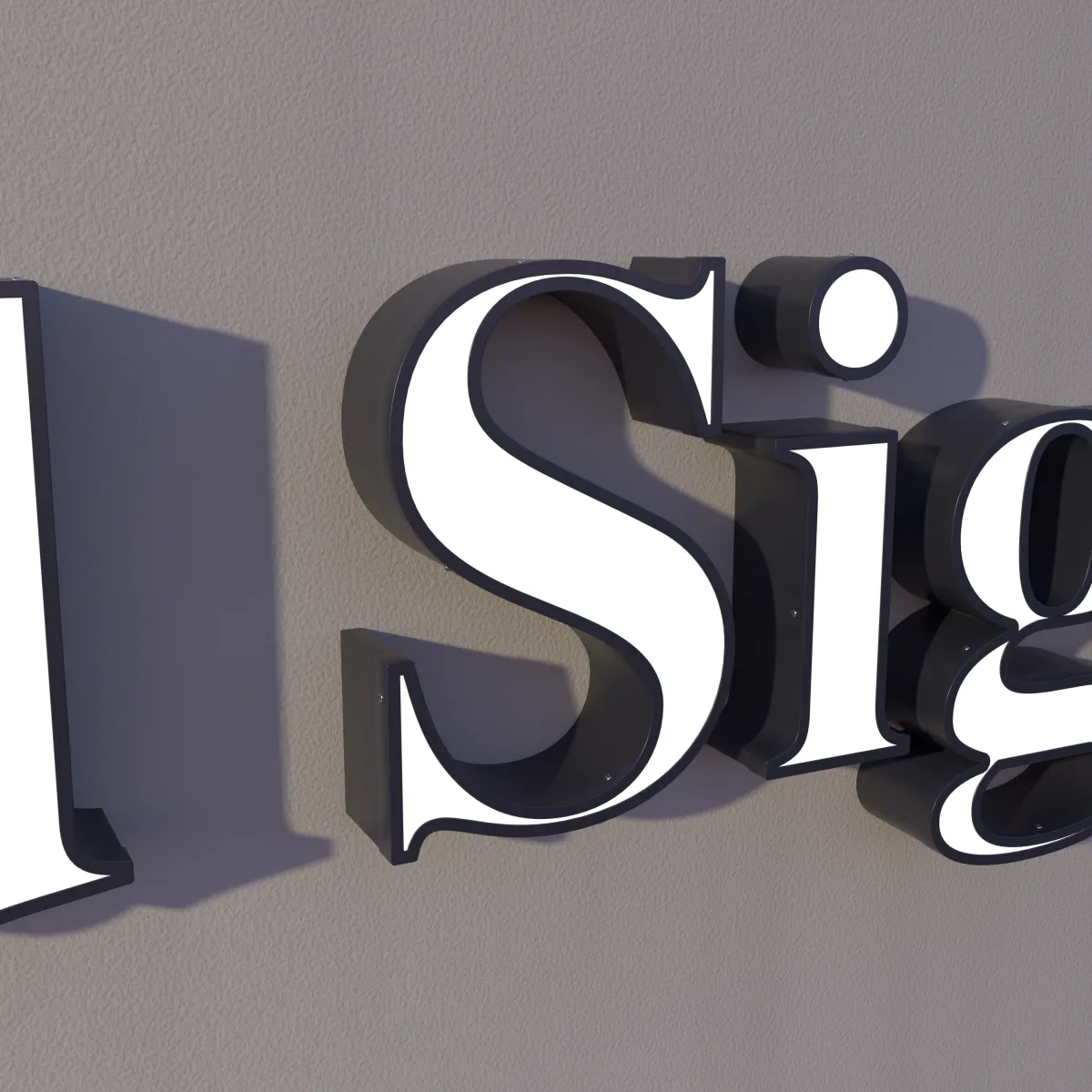
Channel letters are individual 3D letters. Each letter is its own shallow metal shell with LEDs inside, mounted on the wall one by one. Ours are 304 stainless steel, mounted flush to the wall, in three lighting styles: front-lit (acrylic faces glow), halo-lit (solid steel faces, with light glowing on the wall behind) and open-face neon (LED neon inside open steel channels). For the full picture, see Channel letters: the complete guide.
A lightbox is one enclosed box with the lights inside and a translucent face, often acrylic or polycarbonate, with the graphics printed or applied on it. The cabinet is a metal frame that holds the lights and the face. Everything on the sign — name, logo, tagline, phone number — sits on that one face.
Side by side
| Topic | Channel letters | Lightbox |
|---|---|---|
| Shape on the wall | Your letters and logo, with wall showing between them | One rectangle, oval or other panel shape |
| What lights up | Only the letters (or the wall around them, with halo-lit) | The whole face, unless the background is made opaque |
| By day | Reads as 3D lettering on the building | Reads as a panel with graphics on it |
| Lots of text | Best for a name and a simple logo | Easy to add a tagline or several lines |
| Changing the design later | New letters | Often a new face in the same box |
| Sign area (in many codes) | Often measured around the words or letters | Usually the whole face of the box |
Look: letters or a box
With channel letters, your wall is part of the sign. Brick, stucco or a painted fascia shows between the letters, so the sign looks built into the building rather than hung on it. From the side, the depth of each letter adds a shadow line by day.
A lightbox is a self-contained panel. On a plain fascia it can look neat, but the box itself — its edges and its background — is always part of what people see. At night, a lightbox with a light background glows as one bright rectangle, and your name is the darker shape inside it. Channel letters glow only where the letters are.
Visibility
How far away a sign can be read depends mostly on letter height, contrast and spacing, not on the type of sign. Our size guide turns your viewing distance into a letter height.
The difference is in how much of the space goes to the letters. In a lightbox, the text sits inside a frame with margins around it, so on the same patch of wall the letters themselves usually end up smaller than the box. With channel letters, the letters are the sign, so more of the space you are allowed goes into letter height.
Lighting style matters too. Front-lit letters glow across the whole face against a dark wall at night, which is why they read from the farthest away of our three styles. Halo-lit and open-face neon letters are quieter and suit places where people are closer, like a sidewalk or a lobby. If you are torn between the first two, see Front-lit vs. halo-lit.
What drives the cost
There are no fixed prices for either; both are built to order. What moves the price is different, though.
Channel letters are priced mostly by letter height and the number of letters, because each letter is built and wired on its own. A long name costs more than a short one at the same height. The lighting style, finish and the amount of detail in your logo also count. Our pricing page explains each factor, and your exact price comes with your drawing.
A lightbox is priced mostly by the size of the box and its face. Adding another line of text costs little if it fits on the same face, which is why a lightbox is often the lower-cost way to show a lot of information.
Think about the long run as well. When the name or branding changes, a lightbox can often keep its box and get a new face. Channel letters are made for one name; they are a better fit when you plan to keep it for years.
Both need power. A lightbox is one unit with one connection; channel letters each mount separately, which is why ours come with a paper template that marks every hole. Either way, have a licensed electrician make the power connection.
Permits and sign area
Sign rules are local, but one difference comes up often: how sign area is measured. Many codes count the entire face of a cabinet sign, background included (example: Tarentum, PA). Individual letters mounted on a wall are often measured by the smallest rectangles drawn around the words, with the wall between them left out (example: Raleigh, NC).
In places that measure this way, the same allowed area can fit taller channel letters than a box. It varies a lot, so ask your city how it measures before you decide.
If you lease, ask your landlord too. Shopping centers and office buildings often have written sign rules for tenants. Some require individual letters; some allow boxes; some set colors or lighting. Our guide to sign permits lists the questions to bring.
When each one makes sense
Channel letters make sense when:
- Your name, maybe with a simple logo, is the main message.
- You want the sign to look like part of the building, by day and at night.
- Your landlord or city prefers individual letters, or measures sign area in a way that favors them.
- You plan to keep the name for years.
A lightbox makes sense when:
- You need to show a lot: several lines, a list of services, a phone number.
- You expect to change the design, or the box stays with the space when tenants change.
- Budget decides, and your landlord and city allow it.
Some businesses do both: channel letters for the name on the fascia, and the extra details on the door or window, where people read them up close.
Next steps
If channel letters fit your building, start with the wall. Measure the space, take a straight-on photo, and send it with your logo on the quote form. We reply with a drawing of your letters at their real size, a preview of the sign lit up and an exact price. Nothing is made until you approve the drawing.
Looking for ideas for your type of business? See signs for restaurants, retail stores and other businesses.