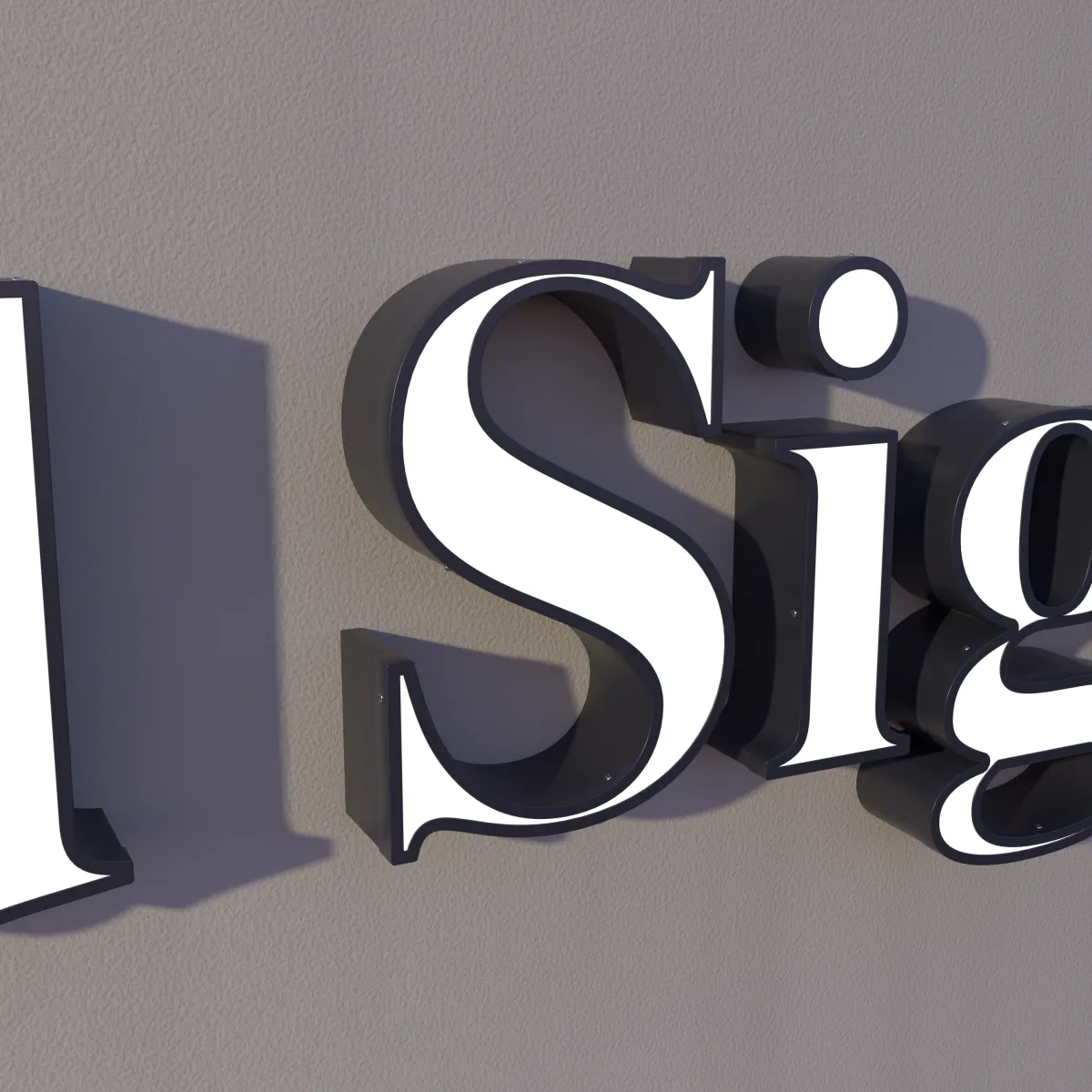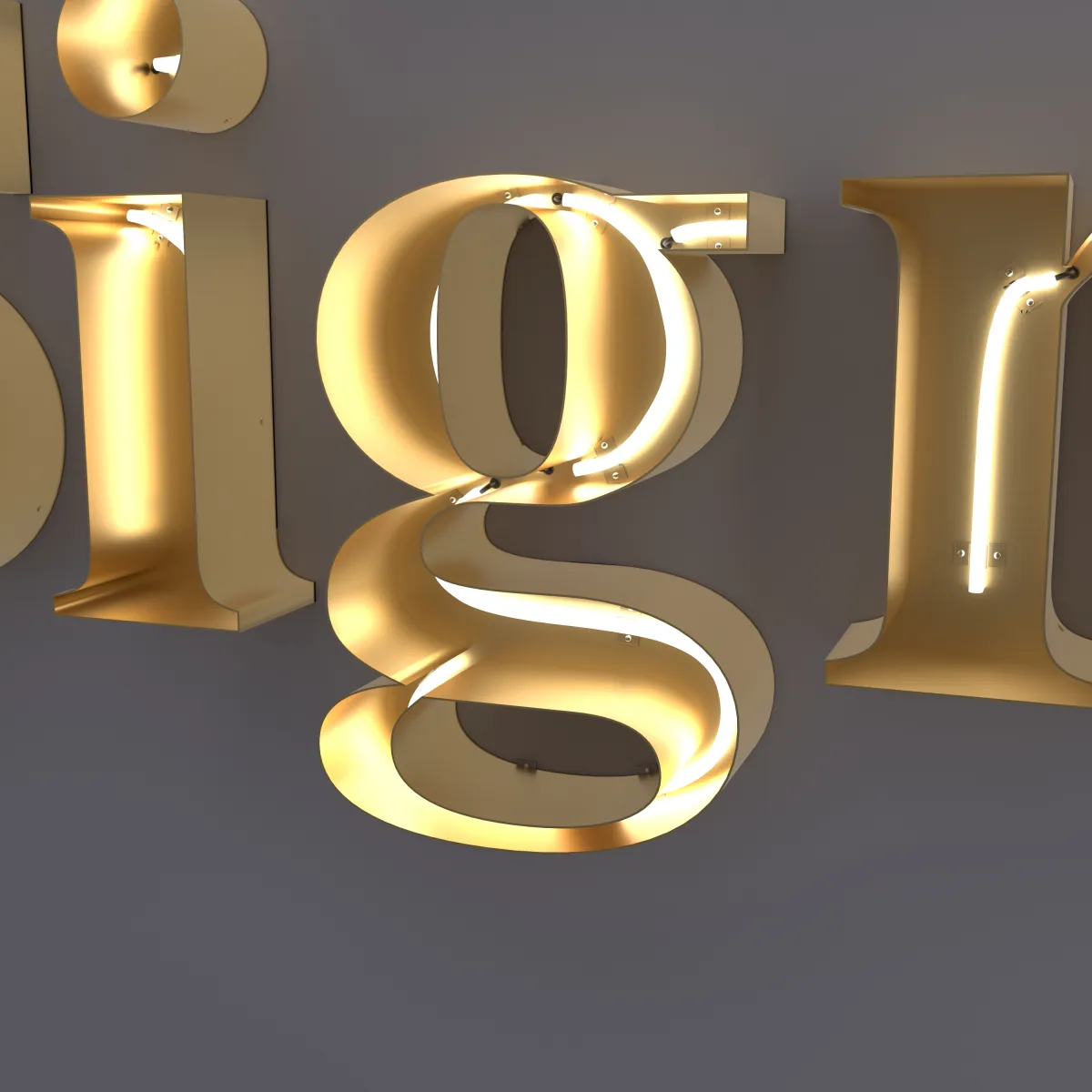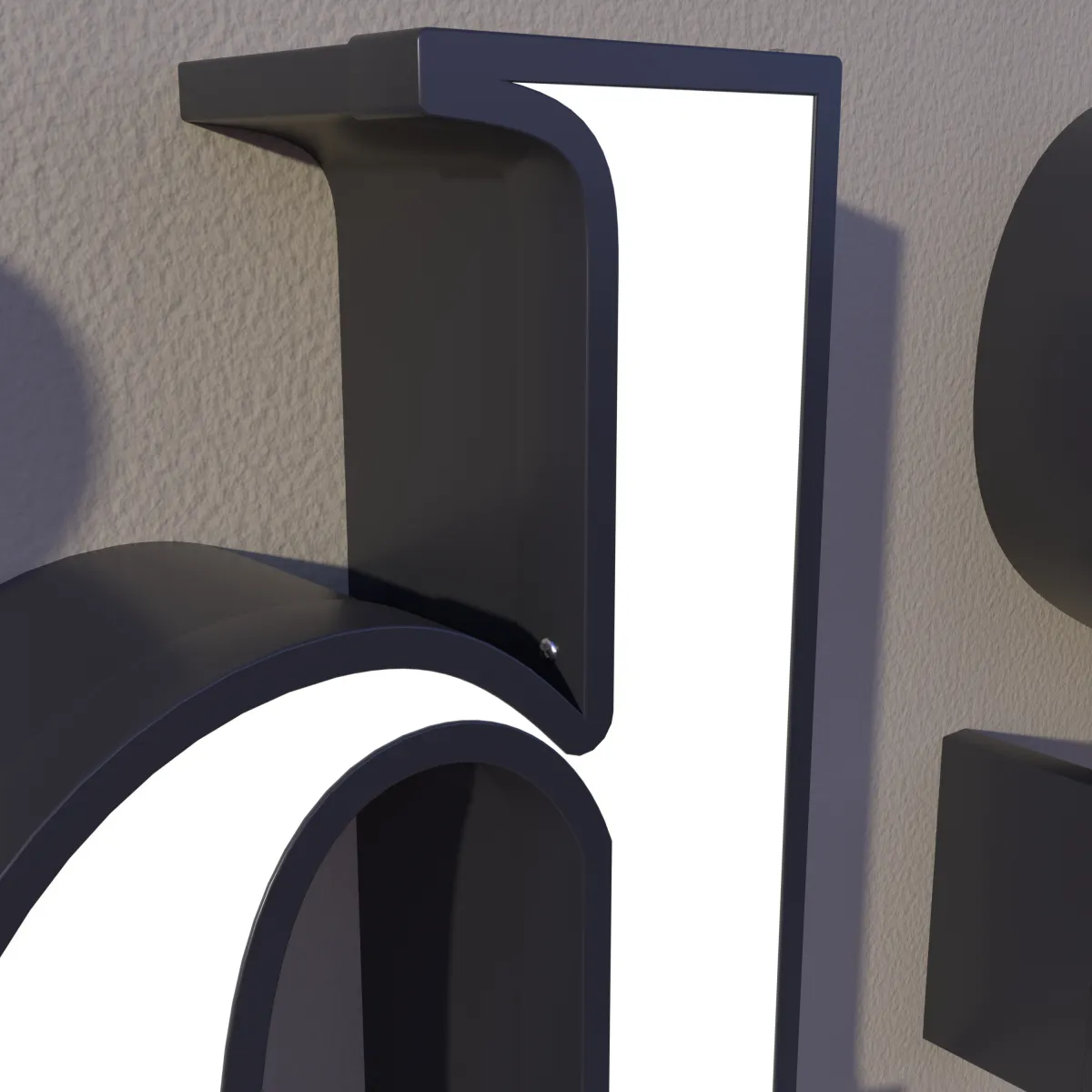
A lit sign has two kinds of parts that age in different ways: the letters themselves, made of steel and acrylic, and the electrical parts that make them glow. Knowing which is which tells you what to watch, what you can clean yourself and what to leave to an electrician.
This guide sticks to general facts about LED lighting, stainless steel and acrylic, with the sources listed at the end. The parts in your own sign are listed on your drawing, and the instructions that come with your letters come first.
How LEDs age
LEDs usually don’t burn out like an old bulb. They dim slowly over time, which the lighting industry calls lumen depreciation (Energy Star).
That is why LED life is normally stated as the number of hours until light output falls to 70% of where it started, written as L70 (U.S. Department of Energy). It is a rating measured under set test conditions, not a date when a sign stops working, and real life depends on how the product is built and where it runs.
The biggest factor is heat. The hotter LEDs run, the faster their light fades, so good heat management matters more than anything else for long life (Energy Star). Over long periods the color of the light can also shift a little (DOE fact sheet).
What usually wears first
In LED lighting, the LEDs are often not the weak point:
- The power supply. Also called the driver, it turns your building’s power into what the LEDs need. The Department of Energy notes that the driver is the weak link for some LED products, and that its life depends strongly on how hot it runs (DOE fact sheet). In DOE stress testing, the failures seen were mostly in the driver circuit, while the LEDs themselves held up very well (DOE hammer test summary).
- Wires, connectors and seals. Any of these can fail and take light out with them (DOE fact sheet).
- The surfaces. Stainless steel does not rust the way plain steel does, but dirt and salt left on it can stain the surface (BSSA guide). Acrylic can be scratched by gritty cloths and damaged by the wrong cleaners (Acrylite guide).
A practical takeaway: if the whole sign goes dark at once, the cause is much more likely on the power side — a breaker, a switch or timer, or the power supply — than every LED failing together. A single dark letter points to that letter’s wiring or its own LEDs.
Cleaning stainless steel
Clean the steel when it looks dirty. For grade 304 used outdoors, the British Stainless Steel Association suggests about every 6 to 12 months in suburban or rural areas and every 3 to 6 months in cities and industrial areas. Indoors, clean it as needed (BSSA guide).
- Turn the sign off at the switch or breaker first.
- Wash with soap or a mild detergent in warm water, using a soft cloth or sponge.
- Rinse with clean water, then dry with a soft cloth.
- On brushed steel, wipe along the grain lines, not across them (SSINA guide).
What to keep off the steel:
- Steel wool, and brushes or pads used on ordinary steel. They leave tiny particles that rust on the surface (SSINA guide).
- Cleaners with chlorides, including bleach. They can stain and damage the surface (SSINA guide, ASSDA guide).
- Brick and masonry acids. If the wall around the sign is being cleaned, keep them off the letters, and rinse right away with plenty of clean water if they splash (BSSA guide).
Near the ocean, or under an overhang. Salt is a major cause of brown surface staining on stainless steel, often called tea staining. Rain helps wash it away, so letters in rain-sheltered spots, such as under eaves, need washing more often (ASSDA guide). If your sign will be near the coast, tell us on the quote form. More in Indoor vs. outdoor channel letters.
Cleaning acrylic
Front-lit letters have acrylic faces, and halo-lit letters have acrylic on the back. The acrylic maker ACRYLITE recommends mild soap or detergent in lukewarm water, a soft cloth with light pressure, then a clean-water rinse and blotting dry. Avoid window-cleaning sprays, scouring compounds and solvents such as acetone or alcohol: they can scratch the surface or cause fine cracks known as crazing (Acrylite guide).
By style:
- Front-lit: the face is what people read, so a clean face is a bright face.
- Halo-lit: the glow lands on the wall, so keep the wall around the letters clean too.
- Open-face neon: with the power off, dust the channels gently with a soft, dry brush or cloth. Don’t pull on the neon or its clips.
Checking the power side, safely
You can check a lot from the ground without opening anything:
- Is the breaker on, and is any switch or timer set correctly?
- Does every letter light, and evenly? Note any dark letters, dim sections or flicker.
- Look, without touching, at the cables where they enter the wall. Note any damage, loose cables or signs of water.
- If you can see the power supply, keep it clear and don’t cover it. Heat shortens the life of electronics.
Write down what you see and when it started. It helps whoever fixes it.
When to call an electrician
- Anything that means opening a junction box, a power supply or the wiring.
- A breaker that trips again after you reset it.
- Flickering, buzzing, a burning smell, or water inside a letter.
- Moving the sign, or changing how it is connected.
Use a licensed electrician, and ask your city whether the work needs a permit. Before anyone touches the letters for cleaning or a closer look, turn the power off at the breaker.
Plan for easy care
Care starts before the sign is made. Tell us on the quote form whether the sign goes indoors, outdoors, under an overhang or near the coast, and send a photo of the wall. When you choose a finish, keep cleaning in mind: see Choosing colors and finishes for stainless steel letters. For the install itself, see How flush-mounted channel letters are installed, and for everything else, Channel letters: the complete guide.
Sources
- ENERGY STAR, Learn About LED Lighting
- U.S. Department of Energy, Lifetime and Reliability fact sheet
- U.S. Department of Energy, Guide to Evaluating LED Lumen Maintenance
- U.S. Department of Energy, Hammer Testing Findings for Solid-State Lighting Luminaires (summary)
- British Stainless Steel Association, Care and Maintenance of Stainless Steel
- Specialty Steel Industry of North America, Care and use in shop
- Australian Stainless Steel Development Association, Preventing coastal corrosion (tea staining)
- ACRYLITE, Care and cleaning of acrylic sheet